
Try asking yourself, right now, how you are.
Almost always, the answer comes from the mind: a quick calculation based on what you’ve done and what you’ve still got to do, on the fatigue you’ve built up and how much more of it you reckon you can take. It’s the answer we settle into most easily, yet it’s also the least reliable. When questioned about wellbeing, the mind tends to consult the diary, mistaking a list of completed tasks for a genuine state of being.
The body, on the other hand, works to a different rhythm. It recognises a sense of ease long before you can put it into words. It signals this through an appetite that returns at regular times, and through shoulders that finally drop and lose their stiffness. You notice it at night, when sleep becomes deep and unbroken, no longer fragmented by brief awakenings. Paying attention to these responses is the only real way to tell whether a break is working, or whether you’re simply carrying the same old restlessness somewhere else.
The illusion of intellectual control
The main problem is that the mind doesn’t stop planning simply because you’ve changed postcode. It carries on organising and assessing, following the same patterns it applies all year round: faced with a free day, it maps out an itinerary; faced with an empty afternoon, it looks for a way to fill it. It measures efficiency, not renewal. And the two are rarely the same thing.
There’s a biological reason behind this mechanism. For much of the year, the body lives in a state of constant, if mild, alertness: deadlines, notifications and micro-decisions keep the nervous system poised for a quick response. It’s a useful condition for handling everyday complexity, but it becomes wearing if it never lets up. The mind grows so accustomed to this inner tension that it no longer recognises it as fatigue, carrying on demanding performance even when all the body is asking for is to stop.
This is how you end up declaring yourself pleased with a hectic stay, marked by excursions, visits and destinations to tick off, while your body tells quite another story: a jaw that stays clenched even at night, and sleep that remains shallow. The mind has closed its books in the black and is content; the body, quite simply, will show the accumulated strain a few days later.
The small markers of release

Recognising genuine wellbeing means shifting the centre of your attention, observing how tension gradually eases throughout the body.
The first marker to shift is almost always the quality of your sleep. As the state of alertness subsides, the slide into rest becomes immediate, and the night passes without those constant interruptions that leave you feeling you’ve not recovered at all. What you gain is a deep renewal, one that eludes digital tracking, yet the body registers it at once.
Almost at the same time, appetite too rediscovers a biological measure. Where heavy pressure tends to have you eating out of habit or for comfort, fitting your meals around blocks of work, hunger becomes a clear signal again once the days regain some breathing space: it appears when it’s needed and fades the moment you’ve had enough.
This recovered calm shows directly on the palate. Stopping eating in a hurry lets the sharpness of taste resurface, giving back the ability to catch the nuances of good ingredients, the texture of fresh bread or the complexity of an honest flavour. It’s a subtle marker, often the first to go when the days become overloaded.
Structural tension, such as that held in your posture and face, takes longer to dissolve. Being the last to give way, it’s also the most honest: when the jaw muscles stop clenching at night and the shoulders finally drop, easing away from the ears, it means the body has begun to trust the place it’s in.
The last signal, and the hardest to earn, concerns the steadiness of your attention. You notice it when you can follow the pages of a book or carry on a conversation without instinctively checking your phone. It’s the definitive sign that your guard has come down and the mind has stopped slipping elsewhere. Taken together, these details form an accurate compass, one that points the right way long before your head persuades itself that all is well.
The time biology needs
This shift doesn’t happen overnight. In the first twenty-four hours, the body holds on to the rhythms of its working routine: sleep may stay light and instincts remain watchful, almost waiting for an emergency to handle.
The real slowing down is usually felt around the third day. That’s the moment when the muscular and nervous systems truly let go. This is why shorter stays often offer little more than the illusion of rest: time is tight, and your defences are given no chance to come down. A few extra days give those benefits the space to surface, and to be felt.
Designing spaces for slowing down
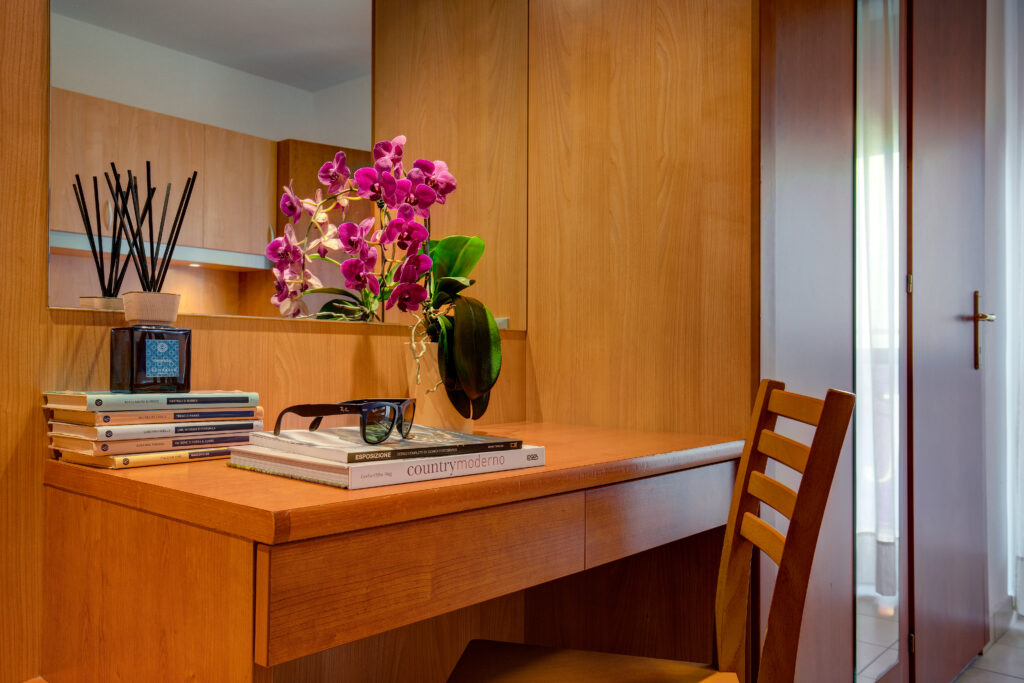
Reading these signals is one thing; creating the conditions for them to appear is another. If the surroundings keep up an accelerated pace, the body will subconsciously mirror it and stay in defensive mode. A hotel built around slow living doesn’t offer a checklist of activities to tick off; it designs the structural conditions that finally let the body lower its guard.
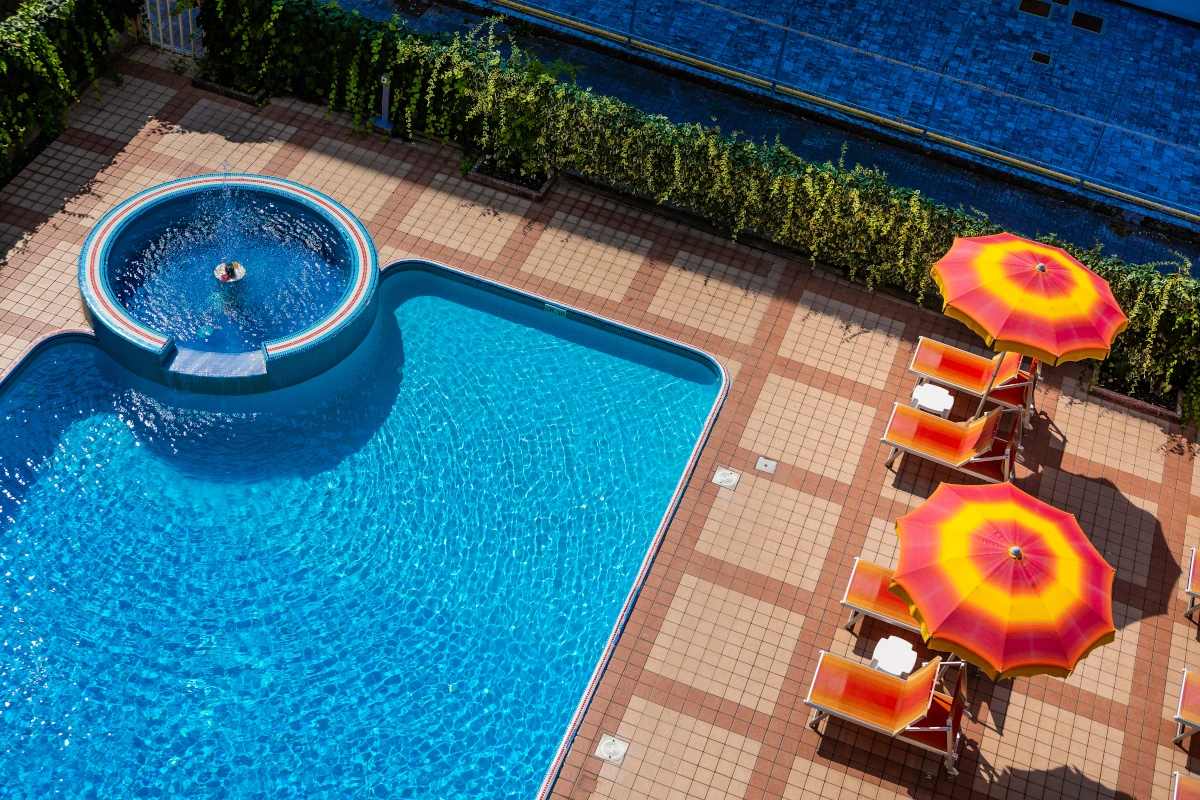
At Hotel Jalisco, in Jesolo Lido, this philosophy translates into considered choices in how the hotel is run. Breakfast is served over a longer window precisely to align with natural waking times and respect each person’s biological rhythm, with a preference for local ingredients that invite attentive, unhurried eating. A few steps away, the warm water of the swimming pool works directly on the muscles: the steady temperature helps release the tightness built up across the back and shoulders, bringing on a lightness you often notice only once you’re out.
The way you explore the surroundings follows the same search for lightness. The bicycles on offer let you get about under your own steam, leaving the car behind and growing used once more to a slower pace, where the journey counts as much as the destination. In Jesolo you can reach everything on two wheels or on foot, a change of rhythm that gives your thoughts room to settle. The experience continues at the table: at the Sorsi e Sapori restaurant and in the spaces of the Ritrovo Lento, the atmosphere invites you to linger rather than rush through one course after another.

To this is added something intangible but essential: discretion. With no demands and no daily programme, you’re given a space of complete freedom. In the areas given over to quiet, the only aim is the chance to be still, with no need to justify doing nothing. It’s the result of the experience of a family that has run the hotel for over thirty years, guided by the knowledge that wellbeing is reached by taking away needless stimulation and artificial tension, one piece at a time.
The coast’s quieter side
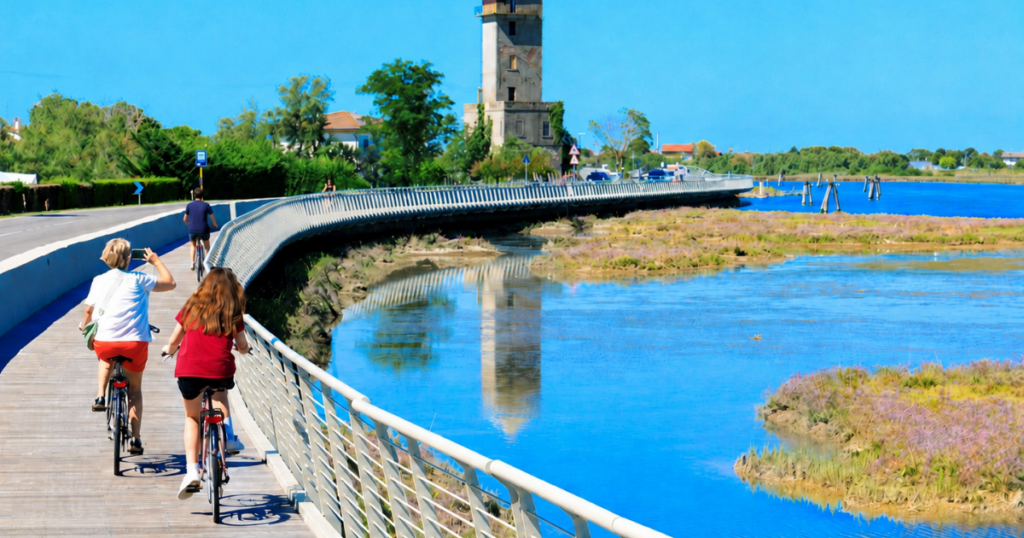
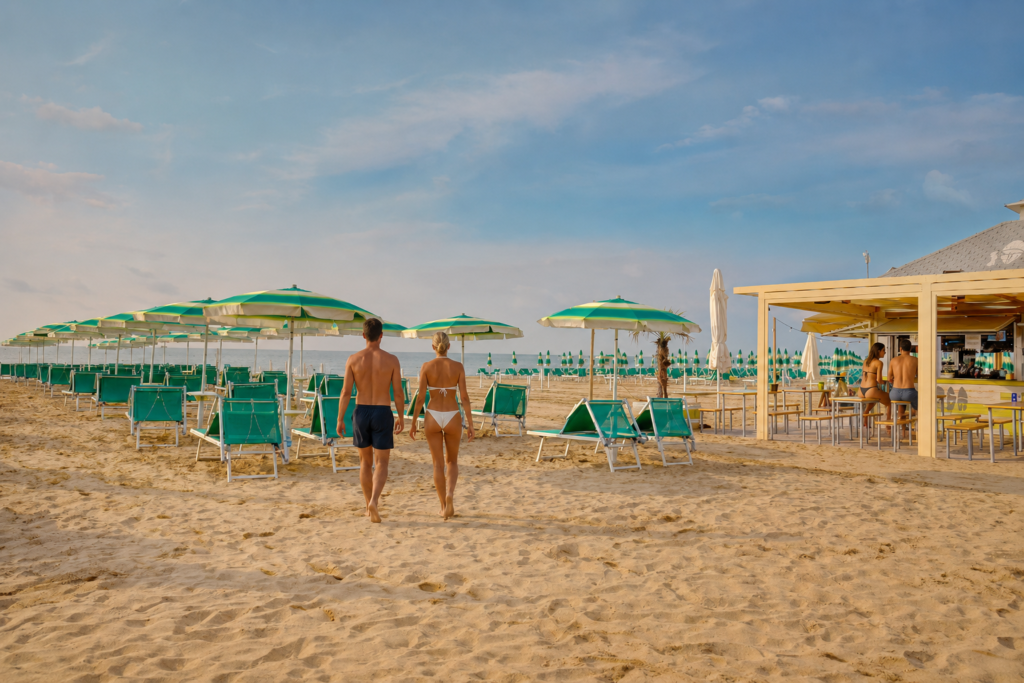
The world outside lends itself to this same slower pace, if you come to it in the right frame of mind. The beach offers broad stretches of calm, while the cycle paths link the shoreline to the scenery of the Laguna del Mort and the trails towards Lio Piccolo.
These are sparse, silent landscapes, set only a short distance from the busier parts of Jesolo. It’s here that you feel the deepest sense of time suspended: facing the still water of the lagoon, with no deadlines to meet, the need for control fades of its own accord.
Carrying your awareness with you
The true value of a slow-paced stay is felt over the long term. Once the body remembers how to listen to its own markers of wellbeing, from steady sleep to muscular ease, this sensitivity remains with you long after you return home.
This capacity to listen becomes a lasting resource. Distinguishing genuine renewal from a mere mental respite allows you to protect your balance amid the daily routine.
Jalisco, Slow Living Hotel in Jesolo, is designed to offer the time and space you need to find your way back to this attunement.
If you feel the moment has come to stop and listen, do take a look at our seasonal stays. The body will see to the rest.
An invitation to slow down
The body doesn’t lie, and it needs its own time to find its balance again. If you feel the moment has come to allow yourself this pause, check our availability for the coming months and choose your days. At Hotel Jalisco, we’ve already set aside a space for your silence.