
Arriving at the hotel and suddenly finding yourself with nothing to do feels rather different from the relief you pictured when you booked.
You notice it in the first few minutes, in the small actions. Opening the suitcase, hanging clothes in the wardrobe, stepping out onto the balcony. Then the room falls quiet again, and the prospect of a whole afternoon with nothing in it stops feeling like a privilege and turns into a practical problem to sort out.
That discomfort takes the form of a physical restlessness: you sit down, you get up, you cast about for something to do with your hands, you wander out to look at the beach and come back a few minutes later. Staying still takes an effort you hadn’t expected to make on holiday. The phone becomes the automatic answer: you pick it up to fill the gap rather than because you actually need it, scrolling out of sheer inertia until you make a conscious effort to put it back down on the table.
Then comes the most irritating thought of all: the sense that you’re wasting time. An afternoon free of commitments looks dangerously like an afternoon lost. And so anyone who chooses a mindful stay ends up in an odd position, feeling guilty for having got exactly what they came for.
How the body reacts when stimulation stops
There are specific physiological reasons behind this difficulty in slowing down. After months of continuous work, coming to a sudden stop doesn’t bring immediate calm; it creates friction. The unease of those first few hours has nothing to do with where you’ve arrived: it comes from the speed you’ve built up over the preceding weeks.
For most of the year the nervous system runs on an unbroken stream of demands: notifications, deadlines, decisions to make one after another. The body adapts and comes to treat that level as its baseline.
When the holiday begins and that stream is cut off, the body registers the drop, reads it as something missing and pushes you to look for a substitute: an organised tour, a list of places to see, a screen. The boredom of those first few hours comes from that search going nowhere.
This transition has been examined in the research literature, including in its more pronounced forms. In 2002 three researchers at Tilburg University, Ad Vingerhoets, Maaike van Huijgevoort and Guus van Heck, published an early paper in Psychotherapy and Psychosomatics on leisure sickness: the tendency of some people to develop physical symptoms such as migraines, fatigue or muscle pain in the first days of a holiday or at weekends, after a stretch of work during which they had felt perfectly well.
Reactions this pronounced affect only a minority. What almost everyone experiences is a milder version of the same process: a sense of restlessness that lasts for a few hours or a couple of days and is rarely talked about, because it sits awkwardly with the common idea of what rest is supposed to be.
The first few days and the change of pace

On those first evenings the quiet of the room can end up magnifying your worries rather than easing them. Whatever you left unresolved at home comes back to the surface, and the mind keeps going over it. During the rest of the year a thought like that is quickly crowded out by the daily routine; in a hotel room all you can do is keep turning it over in your mind, and that keeps it alive.
Sleep can suffer too. You wake early out of habit and, half asleep, go back over problems you won’t actually deal with until you’re home. The residual tension ends up surfacing in your reactions to the smallest things: the weather forecast, which restaurant to choose, a request from whoever you’re travelling with.
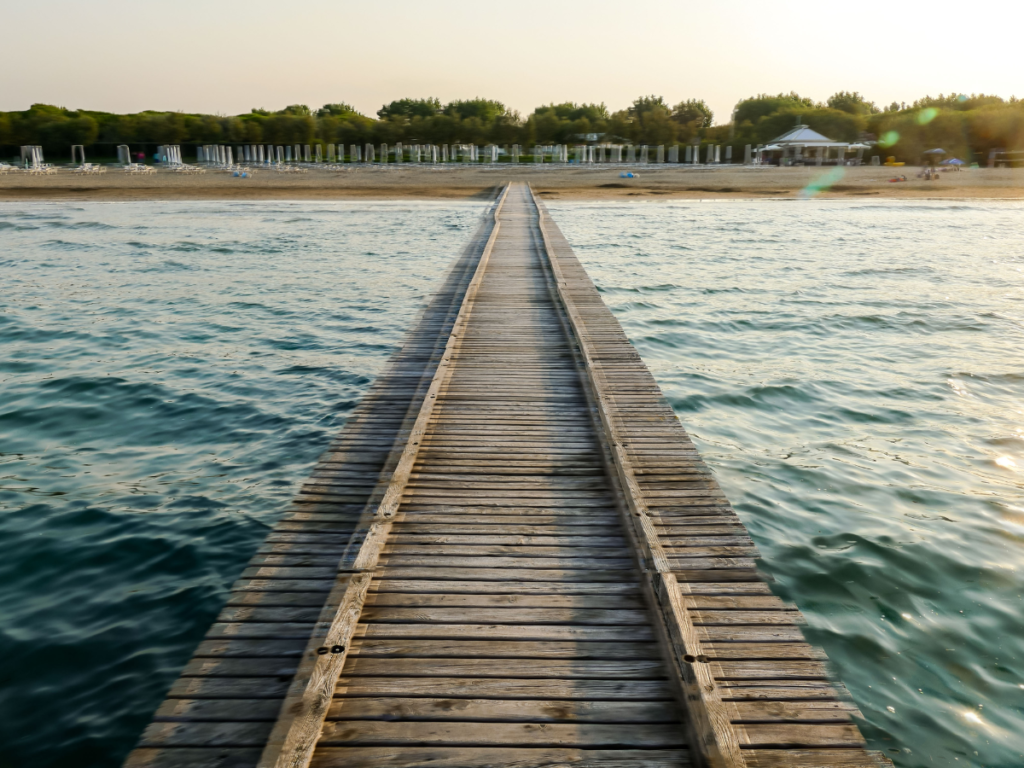
This phase passes more quickly if the day includes simple physical activities that demand little attention: walking along the water’s edge, cycling with no particular destination, swimming, reading a few pages. As the body moves at a steady rhythm, the mind slows to match it and the nervous system begins to shed the load it has been carrying.
Adjustment usually follows a fairly clear sequence. The first day ends with your mind still on alert and following its usual patterns. The second is often the hardest: a marked tiredness sets in although you’ve done nothing demanding, or a sudden impatience with the place itself takes hold. The temptation then is to fill the day with plans just to make the discomfort go away, which cuts the recovery short. Somewhere between the third and fourth days comes the turning point: the shoulders drop, sleep settles into a pattern and the body regains its equilibrium.
This is why a stay of only two nights risks ending at the very point when the resistance is strongest. To slow down properly you have to get past it: a stay of three or four nights is the minimum needed for that shift in rhythm to happen.
Handling the adjustment in practice
Since that initial adjustment is unavoidable, getting through it requires only a few clear rules.
For the first twenty-four hours it helps to suspend judgement. Changing your plans or drawing conclusions about the place the moment you arrive serves no purpose: at that point it’s your accumulated tiredness talking.
The first day is best left free of plans, with mealtimes as the only fixed points. From the second day onwards, planning a single activity for the morning or the afternoon gives the day a simple shape and leaves everything else open.
Phone use is best limited to set times, so that picking up the phone doesn’t become automatic. Two short windows a day are enough; the rest of the time it stays in the room.
When you’re travelling as a couple or as a family, it’s worth remembering that people take different amounts of time to unwind. Accepting that the person beside you may not be moving at the same pace heads off a good many pointless arguments when impatience begins to build.
The most useful move of all comes last: when you feel boredom coming on, wait twenty minutes or so before reaching for a distraction. In most cases the discomfort passes on its own, leaving room for a genuine sense of release.
A space designed by subtraction

A hotel can either work with this transition or cut across it. The easy route is to pack the days with scheduled activities, entertainment and excursions: the guest is kept occupied and goes home carrying exactly the tiredness they arrived with.
A stay built on slow living works instead by taking things away. At Jalisco, Slow Living Hotel, space and time are handed back to the people who arrive.
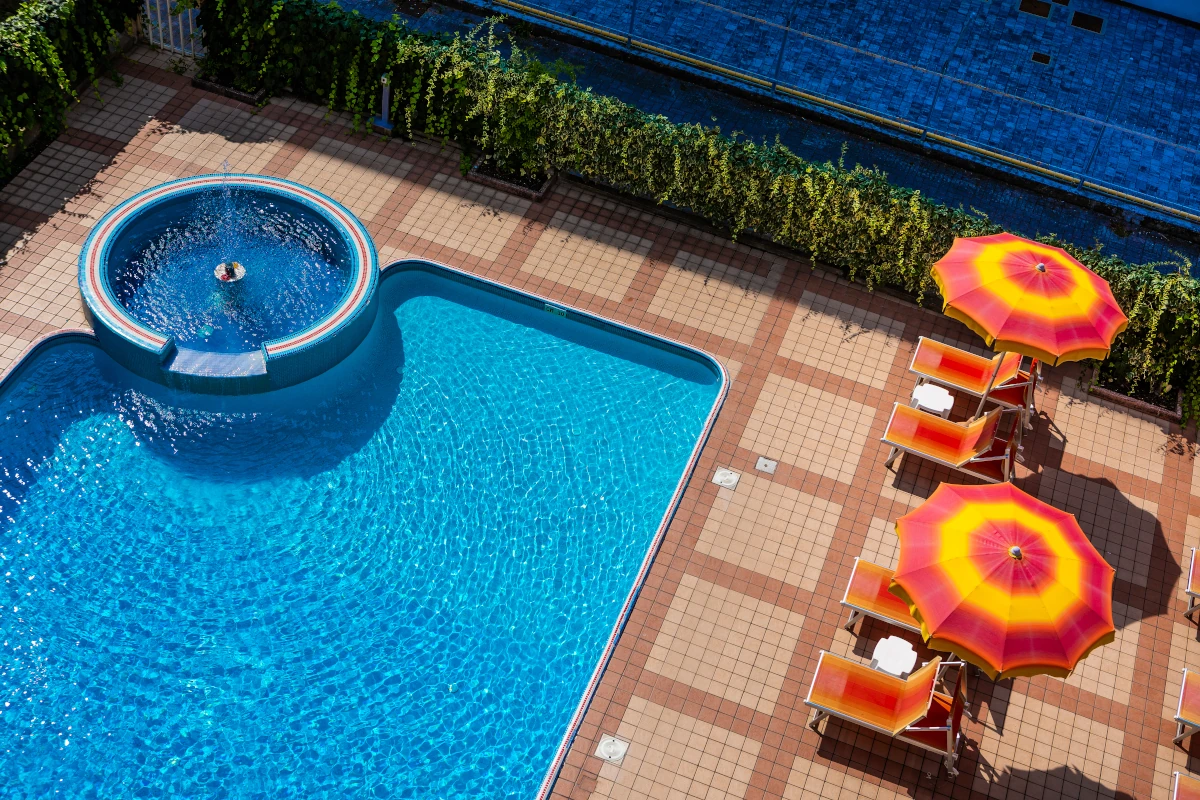
The long breakfast window removes the need to watch the clock and lets the day begin without a rush. The warm water of the pool eases tightness in the back and shoulders. The bicycles let you explore the area and choose your route as you go, while at the Sorsi e Sapori restaurant you can stay at the table for as long as you like, or stop at the Ritrovo Lento bar for a coffee or an aperitivo.
Around the hotel, the cycle paths towards the Laguna del Mort and Lio Piccolo lead into quiet, little-visited areas a short distance from the coast. With the lagoon before you, the urge to keep everything under control simply loses its point.
Behind this approach is a family that has run the hotel for more than thirty years, guided by the belief that real wellbeing is a matter of taking stimulation away rather than adding more of it.
If you feel the need to switch off and give yourself the time a genuinely mindful holiday takes, do check availability at Jalisco, Slow Living Hotel in Jesolo and plan a stay of at least three or four nights: that is how long the body and mind need to find their balance again.