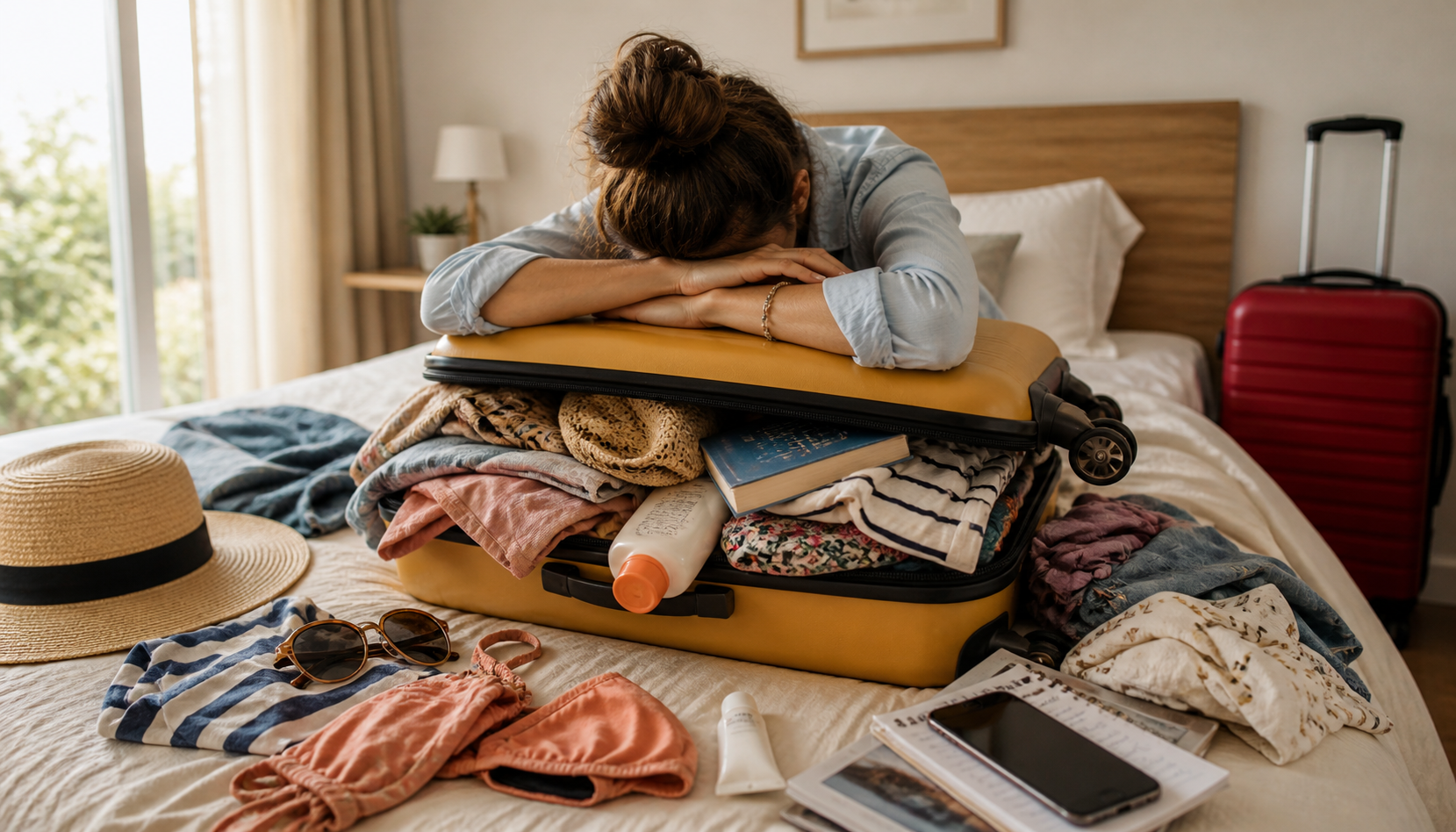
A relaxing holiday brings a very clear image to mind: time opening up, a slower pace, days that unfold naturally. Yet in reality, the opposite often happens. We set off wanting to unwind, only to find ourselves rushing from the beach to excursions, restaurants and experiences, crossing them off one by one. The suitcase gradually empties, yet the mind remains cluttered with everything we thought we had left at home.
This happens because the way we experience time throughout the year follows us wherever we go. We carry it with us, even in our suitcase, and our holiday slowly turns into another to-do list. This is precisely where the need for a slow holiday begins: one that can restore presence, lightness and a more natural rhythm.
When even a holiday becomes a to-do list
Many people plan their holidays with the idea of making the most of every single day. Time is precious, and there is a growing desire to live it fully, with the belief that every hour should count.
In recent years, a very particular idea of a holiday has taken hold: packed days, experiences to photograph and share, and the constant feeling that every pause is time stolen from something else.
The result is familiar. You return home with a phone full of photos, a handful of hazy memories and the nagging feeling that what you were looking for has somehow remained exactly where you left it.
Why slowing down is so good for us, even when we are not used to it
We live in a culture that values action. Doing, organising, optimising: these habits become automatic and stay with us even when we are supposed to be resting.
Wellbeing follows a different principle. True recovery comes from the balance between stimulation and rest, between movement and stillness. It begins when we allow ourselves moments without an agenda, in which the day can simply find its own rhythm.
This is where the mind and body begin to regenerate.
According to Attention Restoration Theory, developed by psychologists Stephen and Rachel Kaplan, the brain needs periods of stillness and mental rest to process experiences and recover focus. When our days become too full, this pause grows smaller until it disappears altogether. And with it, we lose the deep sense of renewal that should lie at the heart of every holiday.
What changes when we choose to slow down
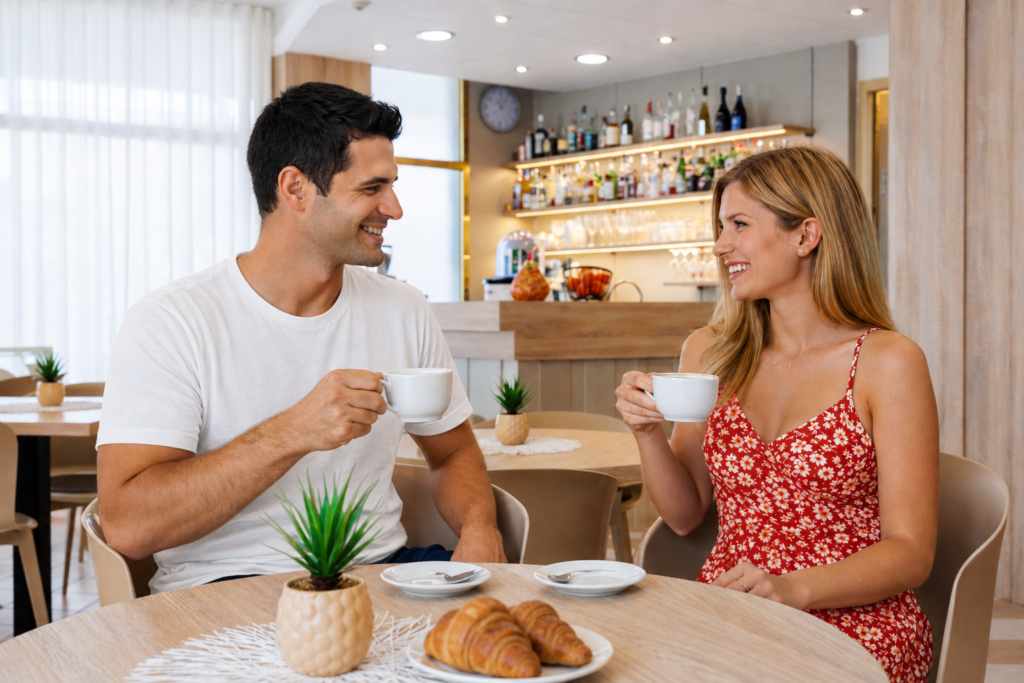
When we slow down between one experience and the next, the holiday takes on an entirely different quality. The days stop being a sequence of activities and become a space to be savoured, where each moment finds its natural rhythm and time no longer seems to slip away quite so quickly.
In this more unhurried atmosphere, the details that make a stay special begin to emerge: the morning light streaming through the window, a breakfast enjoyed without haste, the pleasure of lingering a few minutes longer in a place where you feel at ease, a conversation that starts naturally and continues for as long as there is something to say.
These are simple yet meaningful moments, and they are often what make a holiday feel truly memorable.
Even the way we spend time together changes. For couples, the pleasure of genuine conversation returns, of being together without a schedule. For families, children move freely, following their curiosity and enthusiasm, while adults finally give themselves permission to breathe, watch and simply be present. Time is no longer something to fill; it is something to share.
And this is precisely the value of a slow holiday: you return home carrying something that so easily fades into the background during the year: more presence, more lightness, and a greater capacity to listen to yourself and to those you love.
Slow tourism: a different way of approaching holidays
Slow tourism, or slow travel, emerged as a response to the frantic pace that has found its way even into our free time. More than a trend, and certainly more than a luxury for the few, it is a conscious choice that places the quality of the experience above the number of activities. At its heart lies a simple principle: presence. Being in the place where you are, with your mind and body finally in the same place. It means entering into the rhythm of the destination, letting yourself be guided by its pace and adapting naturally to it.
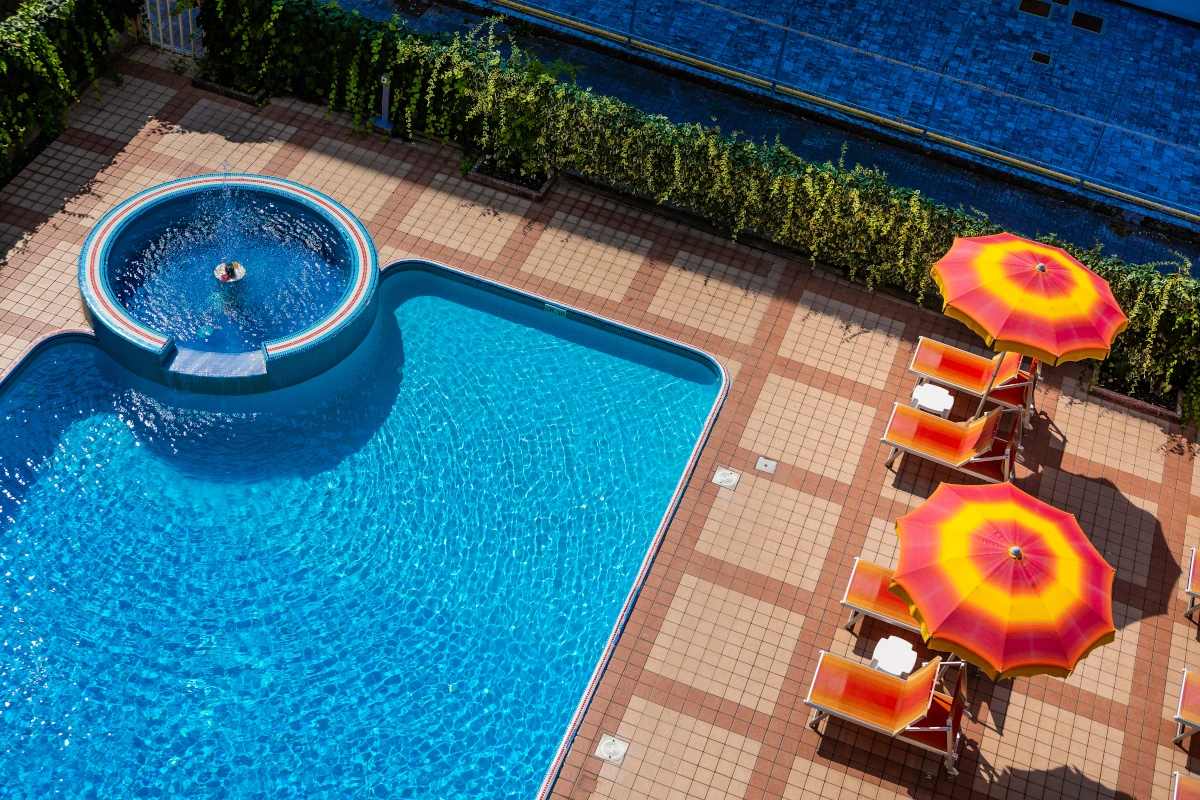
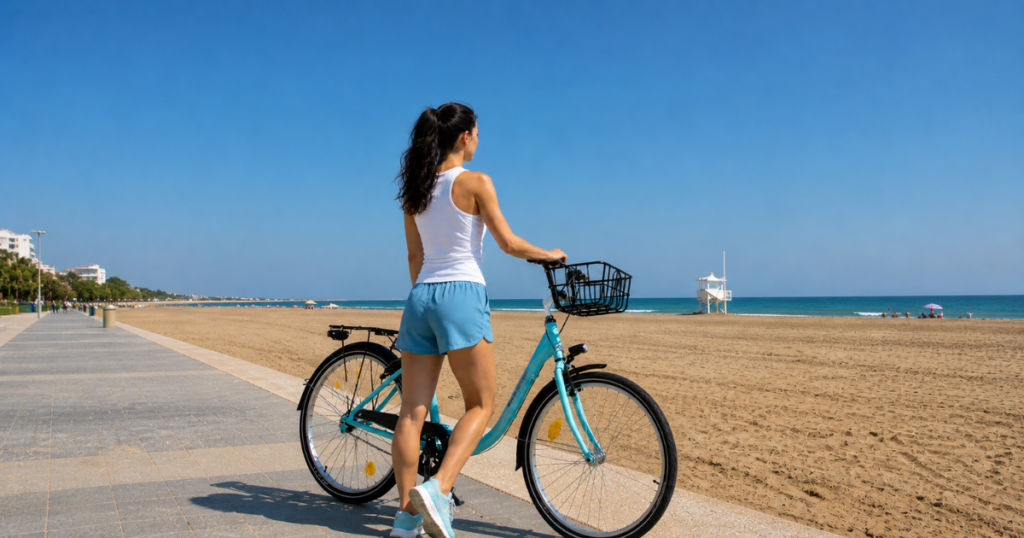
When the hours are freed from constant planning, something unexpected happens: your gaze lifts, your senses return to the present, and you begin to notice details that haste usually keeps hidden. In truth, it is another form of attention. A slow day can take many forms: an aimless bike ride guided by the curiosity of the moment, the pleasure of stopping wherever something catches your eye, a book read in the shade of the terrace, a moment by the pool that stretches on without looking at the clock.
At first glance, it may seem like a simple day, almost unambitious. In reality, it is exactly what many people struggle to allow themselves, and often what they need most.
Slow living by the sea: why Jesolo might be the perfect place
Jesolo Lido: a lively destination where you can still choose your own pace
Jesolo Lido has the energy of a lively destination. It is bustling in summer and has its fair share of nightlife. Yet it offers something that few Italian seaside destinations can match: the chance to set your own pace.
The beach is long enough to offer a quiet corner even in August. The area is pedestrian-friendly, which means the car can stay parked for days, everything is within walking distance, and your mind already feels lighter, with one less thing on the to-do list.
The cycle paths connect the seafront to Laguna del Mort and the routes leading towards Lio Piccolo: quiet, still-hidden landscapes just a few kilometres from the liveliest part of the coast. Bicycles become the most natural way to explore them, giving you the freedom to stop wherever you like and return whenever you feel ready.
It is a destination that adapts to your pace, provided you choose to take it slowly. And that is already a rare thing.
Hotel Jalisco, Slow Living Hotel, fits naturally into this balance, with a philosophy built over time and lived long before it was ever put into words.
For over thirty years, the same family has welcomed guests with the kind of discreet care you notice in the details: in the way the spaces are designed for relaxation, in the breakfast that invites you to take your time, in the welcome that feels warm even on cooler days, and in the relaxation area where time seems to lose its direction.
It is a place that gives you the space to shape your day, or simply to let it unfold.
How to start enjoying a more relaxed holiday
Changing your approach does not require a complete overhaul. It begins with simple choices.
Leaving a few half-days free of plans is already a good place to start. Very often, it is those unplanned moments that become the clearest memories: a conversation that begins by chance, a street you wander down on a whim, a quiet pause you had not expected.
Even rethinking your relationship with your phone changes the quality of your experience. Using it intentionally, rather than out of habit, brings you back to the present. The difference between photographing a sunset and watching it with your own eyes may seem subtle, yet when you return home, the most vivid memories are always the ones in which you were fully present, with all your senses.
The choice of where to stay also matters. When the environment around you reflects the pace you are seeking, slowing down becomes the most natural response. It happens when the spaces invite you to stay rather than move on, when the atmosphere does not rush you, and when no one asks what you have planned next.
And then comes the hardest part: giving yourself permission to stop. Staying a few extra minutes to watch the sea, listen to the silence, and let the day take shape on its own. It is the part of the holiday we often find hardest to allow ourselves, and the one that changes us the most.
Slowing down is a conscious choice
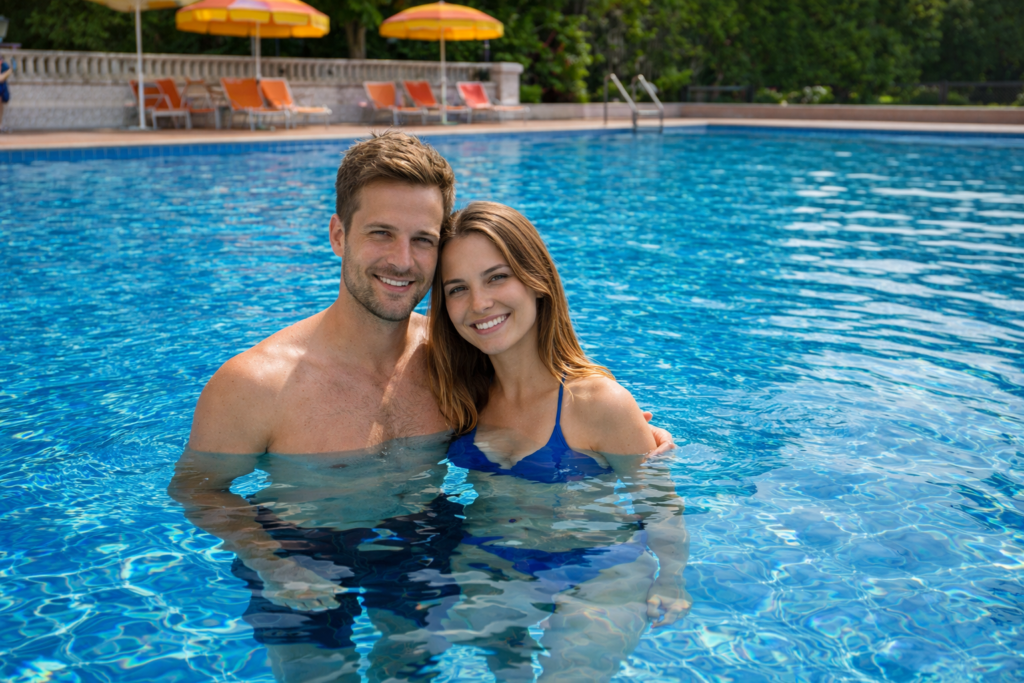
We keep rushing even on holiday because that is the pace we know best. Yet it takes very little to change our perspective. When time to fill becomes time to experience, even a holiday takes on a different shape.
Slowing down begins with a conscious choice: bringing back to the surface what so often remains in the background throughout the year.
Slow tourism offers exactly that: a more natural way of travelling, one that brings you home with awakened senses and vivid memories.
If you feel the need for a genuine break, Hotel Jalisco, Slow Living Hotel in Jesolo Lido, is the place to begin. Here, time is on your side.